Community Homestead
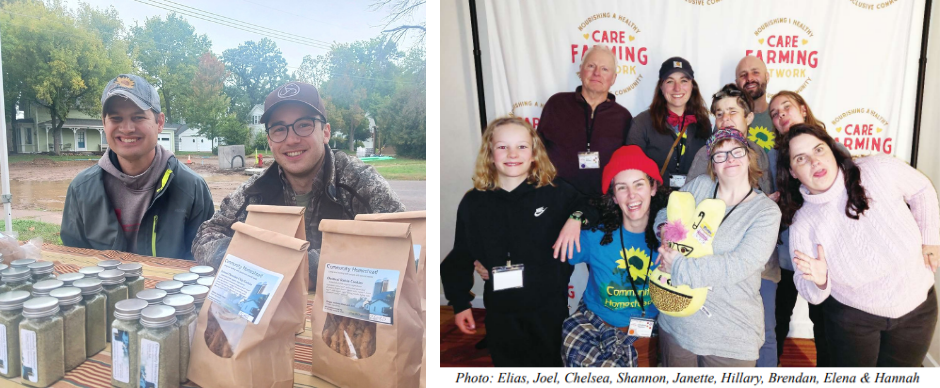
Community Homestead is a nonprofit life-sharing community in Osceola, Wisconsin, 45 minutes north of Minneapolis/St. Paul. About 40 people of all ages and abilities, including adults with intellectual and developmental disabilities (I/DD), live and work together on a 200-acre certified organic farm. Together they run a large CSA, bakery and processing kitchen, on-farm store, and a wide range of crafts—all built on the Camphill model of life sharing.
Mission
To create and sustain a community where people with disabilities can reach their fullest human potential.
Farm Snapshot
Location
Osceola, Wisconsin, in the St. Croix Valley
Founded
Incorporated in 1995
Farm Size
200 acres, plus 40 additional acres worked in a conservation partnership with Standing Cedars, a local nonprofit. About 33 acres are garden and orchard; most of the rest is perennial hay and pasture for livestock.
Business Structure
501(c)(3) nonprofit with a board of directors
Staffing
- Around 15 long-term “carrying members”: live-in volunteers committed to the community with no planned exit date. There are no paid staff.
- Short-term residential volunteers from the U.S. and abroad, usually six weeks or more
- Local, non-residential volunteers, from weekly regulars to corporate and student groups
Operating Budget
Built each year by the carrying members and approved by the board.
- About 40% comes from farm and food sales (CSA, farm store, bakery and processed goods)
- Residents’ supports are funded through Medicaid
- The single largest fundraiser is an annual regional day of giving, which brings in $40,000–$50,000 in one day
Programs & Services
Residential life sharing in seven licensed adult family homes; day program; respite care; student and community groups; summer and winter CSA; on-farm store; bakery and food processing kitchen; crafts; seasonal events.
Who They Serve
Adults with I/DD and other disabilities; families seeking respite; and the wider Twin Cities and St. Croix Valley community through organic food.
ORIGIN
Community Homestead was started by five adults (with six children between them) who had grown up in or volunteered with Camphill communities on the East Coast. After a decade working and raising families away from Camphill, they felt something was missing. They wanted a way of life with a greater purpose, where they and others could find direction, identity, and value.
They created Community Homestead, established in 1995 at Oscar Olson’s farm, Cedar Bend. Olson himself joined the group, and together they began building the households, land work, and activities that define the community today. The community is inspired by Camphill, anthroposophy, and organic and biodynamic agriculture; it is not a religious community.
Community Homestead has grown steadily since its founding. A community center was added around 2008 when the community no longer fit in a single house for meals and celebrations. The garden and orchard have also expanded in recent years.
One thing stands out about the mission: it says nothing about agriculture. “Community Homestead isn’t necessarily about the ag,” Shannon explained. “It’s about the people who are there. If they want to do ag, then we do ag. If they don’t, then we transition to doing something else.”
PROGRAMS, STAFFING & OPERATIONS
Life Sharing
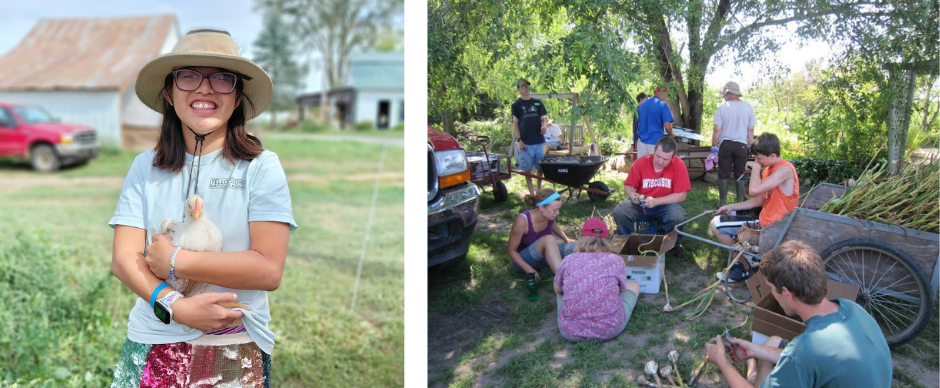
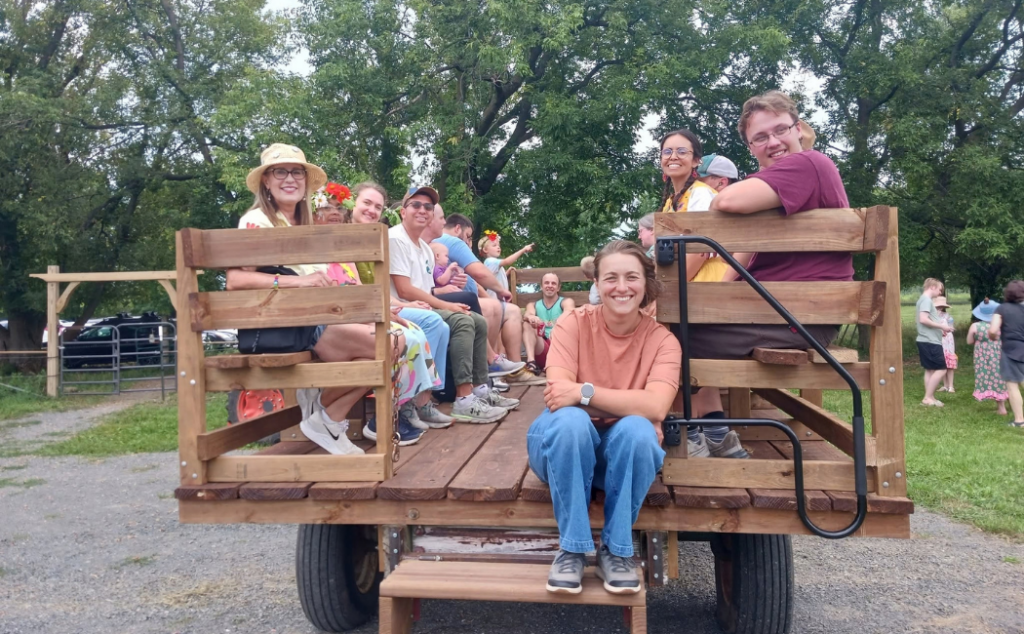
Community Homestead follows the Camphill model of life sharing. People with and without I/DD live together in the same homes, cooking, cleaning, working, and celebrating side by side. The community’s seven licensed adult family homes are all on one property, and about 16 people with disabilities currently live there. There is a long waiting list, and the community is actively creating more space, including a newly purchased house and four new apartments.
Day Program, Respite, and Groups
The day program serves nine or ten people who live nearby, either with family or in their own apartments. Participants come anywhere from one morning a week to every day; some stay for dinner or evening social activities. Participation rises in the summer and dips in the winter, when younger participants are back in school.
Through the respite care program, people from the greater community are invited to spend time in their licensed homes. This allows families to take a break or travel without scrambling to arrange coverage. The team has found respite to be one of its best outreach tools.
Student groups also visit several times a year to see how the community lives and works.
The Work
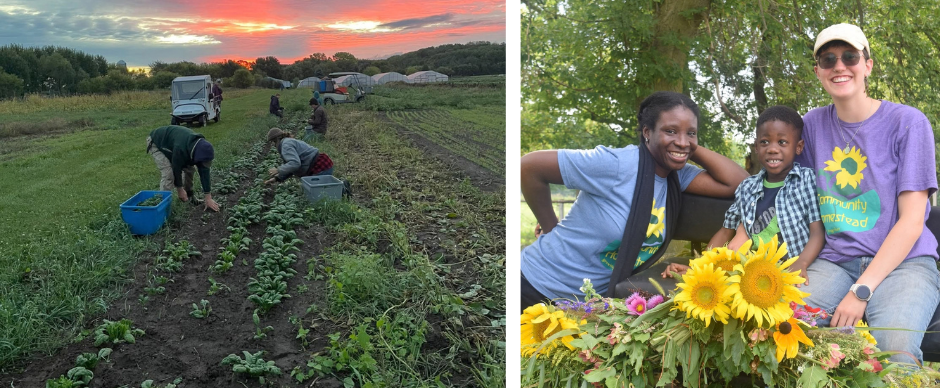
Every activity at Community Homestead is meant to carry three kinds of value: economic, therapeutic and social. The land work includes a certified organic garden, orchard, and farm that raises cows, pigs, chickens, and turkeys. Produce, fruit, meat, baked goods, and processed foods all feed CSA members, and nearly everyone in the community touches the food before it leaves the farm.
The 2026 summer CSA included about 250 shares. The community handles everything from marketing and production to packing and delivery. A slower-paced winter CSA provides an opportunity to shift roles for variety and inclusion. Some people aren’t well-matched with the fast-paced summer harvest, but they thrive with the winter pace.
The community reopened its on-farm store in summer 2026 after renovating an 85-year-old shed with a new metal roof and lighting. The goal was increased visibility, and it worked. Neighbors who once came to a single event each summer now stop by weekly and do half their grocery shopping there.
Local partnerships extend the work further. Farms across the St. Croix Valley share equipment and volunteer. One example: if a neighboring tree farmer doesn’t have someone to make wreaths for him, he gives the community his evergreen offcuts, community members make wreaths and sell them back to him, and the tree farm sells them.
Staffing & Volunteers
Community Homestead has no paid staff. At its core are around 15 long-term carrying members—volunteers who have committed to the community with no planned exit date. The community provides their housing, vacation time, and an annual amount toward retirement savings. They build the budget together each year before it goes to the board.
Short-term residential volunteers commit to at least six weeks, though the community prefers six months or more. A one-year educational track is in development. Residential volunteers must be 16 or older and pass a background check.
Local volunteers can give whatever time they have. Corporate groups may come for an afternoon fencing push; families spend part of a school break on the farm; and alternative spring break groups visit. Volunteers with special skills are especially welcome: a tai chi instructor and a local choir director each donate a weekly session.
A Day in the Life
Several times a year, carrying members sit down with a printed schedule so large it requires its own printer! Listed on one side are all the activity spaces: the houses, farm, garden, orchard, bakery, craft spaces, community center, wood shop, and office. Initials indicate who goes where for each morning and afternoon session, five days a week. Each space has a co-worker or two, plus a crew of anywhere from two to fifteen people, depending on the season.
House crews clean, cook, and tend the yard. Land crews work through the day’s tasks on the farm, in the garden, or in the orchard. Farm mornings follow a steady routine of animal chores, while garden work shifts with the week and the season. The rhythm changes sharply as the fast-moving Wisconsin summer transitions to a slower winter.
Participation is a choice. Residents are not required to join activities, which is why they’re called activities rather than work areas. When someone says a placement isn’t working for them, the schedule leaves room to try something else.
Fundraising and Outreach
Community Homestead holds several fundraisers each year. Two fundraisers bring people to the farm, and one takes the community out into the area. They participate in an annual regional giving day, which Shannon likens to a National Public Radio member drive. Everyone reaches out to friends, family, and extended networks, and that single day raises $40,000 to $50,000.
Because the community asks its families for money only once a year, the rest of the year’s outreach (school groups, wreath-making demos at the tree farm, events, and CSA connections) builds the relationships that make the giving day work. The Twin Cities CSA members have become an outreach network of their own, called on when Community Homestead is seeking volunteers or additional event guests.
Licensing, Regulations, and Insurance
Community Homestead’s residential homes are licensed by the state or county as adult family homes, a Wisconsin license type.
How does Community Homestead operate within the federal Home and Community Based Services (HCBS) settings rule? This rule requires Medicaid-funded settings to support community access and individual choice, and it gives extra scrutiny to settings where people live and spend their days in the same place. Three elements of Community Homestead’s operation are key:
- Community Homestead residents choose their activities each day and can change them
- Every resident has documented opportunities to go out into the wider community
- Anyone, resident or volunteer, can work off the farm. One longtime member who rents an apartment on the property, for example, holds a regular job in town.
Zoning has rarely been an obstacle. The original farmhouse has sat on the 200-acre farm for nearly a century. The nearby properties the community purchased were already residential, so most projects are renovations rather than rezoning. The community is the township’s largest taxpayer and chooses to pay property taxes, and the township has been generous with permits. Three building permits are active now.
The community has worked with the same insurance agent since its early days; they know the farm and its plans well. Community Homestead licenses its bakery and processing kitchen and has been inspected by the FDA twice.
The community discerns its own framework for how it wants to live, and continually fits into the frameworks that exist around it.
Successes
- People stay and make it home. About eight current residents have lived at Community Homestead longer than Shannon’s 11 years. Hillary first came through the day program at 16, studied farming after high school, moved in, and at 39 is still part of the community.
- Small changes add up to big ones. Shannon calls them “miracle moments”. A member who has repeated the same few conversations for years meets a new volunteer and has to find something new to say; someone who has received assistance with their teeth for months one day manages on their own. Batya describes a member who once found a social situation hard, and is now coaching a newcomer through the same thing.
- A community that adapts as people’s lives change. Residents move between houses as their needs and relationships change, and the community has learned to support members as they age.
- Earned revenue as part of the mission. About 40% of the budget comes from what the community grows, bakes, and makes. Every activity is designed to carry economic, therapeutic, and social value at once, and members take pride in producing food that hundreds of households eat each week.
- A visible, connected presence. Reopening the farm store turned once-a-year visitors into weekly shoppers. Partnerships with St. Croix Valley farms, schools, and local businesses bring people to the farm and welcome community members to partner spaces.
- A day program that eases transitions. For people considering moving in, the day program and respite stays act as gentle on-ramps. Everyone gets to know each other before anyone commits.
- Steady growth after 30 years. The community is adding a newly purchased house, four apartments, a new bakery space, and a choir program. It has room to welcome new members for the first time in years.
What's been challenging
- Living close to people all the time. Life sharing means very little separation between work, home, and community. Shannon describes ending some days with a head full of other people’s concerns and needing to clear it out before sleep. Finding personal space and balancing farming, caregiving, and one’s own life takes constant effort.
- Practicing what you teach. Communication is hard, even for people who teach it. “We teach people how to be better communicators,” Shannon notes, “and yet we can sometimes be horrible at communicating on our own.” The community relies on layered meetings to manage this: house conversations, whole-community meetings, open business meetings, and weekly carrying-group meetings where long-committed members can raise hard issues in trust.
- Recruiting volunteers. The channels that once brought in a steady stream of volunteers aren’t working as well as they once did, and the community is building new ones. The rural setting can also surprise recent college graduates expecting a busy town; Osceola’s main street is short.
- Fitting a different model into standard frameworks. Social workers, inspectors, and insurers often need to have their model explained. For example, a resident living in one house and completing daily activities in another may cause confusion. Regulations designed for typical settings, such as daily training logs for licensed kitchens, require extra documentation.
- More need and interest than they can accommodate. The waiting list for residential participation is long. Openings are filled by matching needs rather than first come, first served. This keeps the community balanced, but it means that many people wait.
Learn More
CFN Virtual Deep Dive: Watch the recording of the presentation and discussion and view the slideshow presentation.
Community Homestead website
Follow Community Homestead on social media:
Case study prepared by Care Farming Network, with support from Community Homestead.