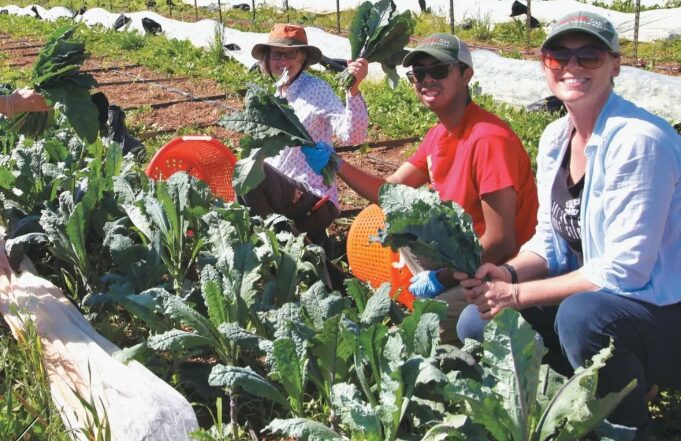
By midmorning, crates of greens are already stacking up near the wash station of Red Wiggler Care Farm. A line of growers moves steadily down a row, hands practiced, eyes trained on what’s ready for harvest and what needs another day. Someone calls out a question about bunch sizes. Someone else laughs. The work continues.
Enrique Blanco Jr. pulls a carrot from the ground, brushes off the soil, and sets it gently onto a wooden farm cart. He is one of 18 professional growers working at Red Wiggler this season, part of the farm’s long commitment to meaningful training and jobs for adults with developmental disabilities.
This is what farming looks like here–productive, vibrant, and unmistakably joyful.
Now in its 30th year, Red Wiggler is often described through its mission. But what you notice first is not a program but a working organic farm. The people harvesting, washing, packing, and coordinating volunteers are skilled agricultural workers whose labor feeds hundreds of families across the region.
“One of the most important things you can do is feed people,” one grower says. “That makes me proud.”
For many families, that pride is coupled with urgency. Parents of people with disabilities often hold persistent questions: “What happens when our child graduates from school? What happens when we’re no longer here to help?” Public agencies can offer services, but long-term, stable employment–work that is independent and meaningful–is rare.
Read the full article in the Spring 2026 issue of Edible DC: