On October 4th, CFN teamed up with Adults Creating Residential Employment Solutions (ACRES) Project (State College, PA) to host a Care Farm Tour & Meetup. Thanks to the Pittsburgh attendees who traveled several hours to join us!
Founded in 2017, ACRES Project strives to build a safe, inclusive community that bridges gaps in services for neurodivergent people through social, educational, and vocational programs. Executive Director Bellamarie Bregar, a retired special education teacher, shared that “ACRES programming has evolved with our participants and employees. When someone new wants to join us, we work together to find activities they’re interested in and create a niche for them.”
ACRES’ partnership with the Office of Vocational Rehabilitation (OVR) is central to their work. OVR funds Paid Work Experiences (PWE), the paid MyWork Program for high school students, Work Experience for Adults (WEXA), Supported Employment, Community-Based Work Assessments (CBWA), and job shadowing. Each of these programs provide opportunities for neurodivergent individuals.
Aquaponic, Hydroponic & Outdoor Gardens
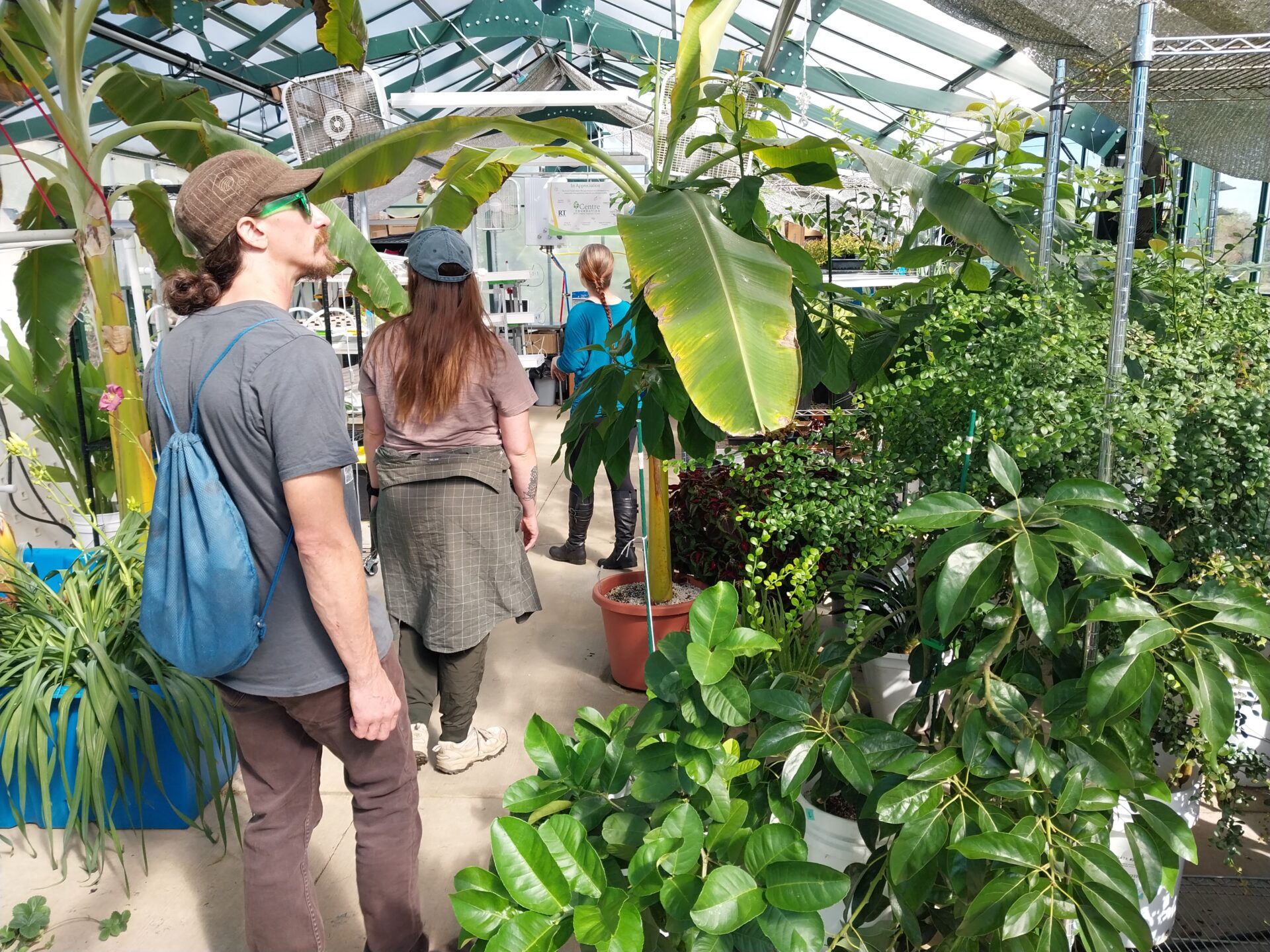
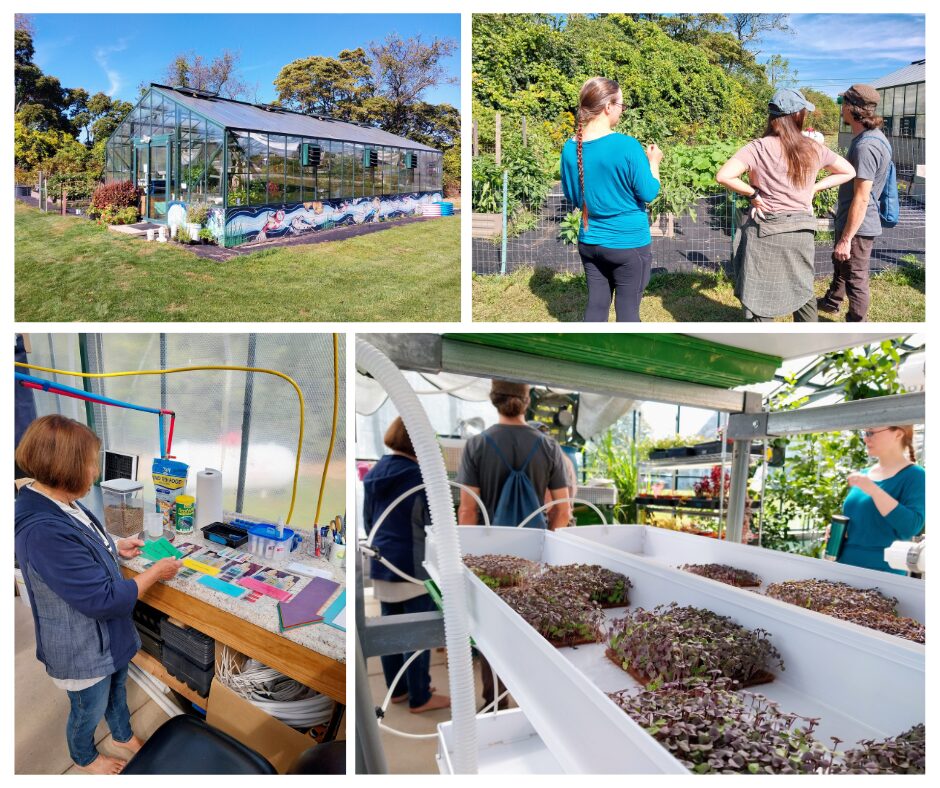
Rosemary Schwegel, Greenhouse Production Manager guided us through the hydroponic and aquaponic systems in the ACRES greenhouse. In the aquaponic system, Japanese goldfish waste is used to fertilize crops. In turn, plants filter water for the goldfish. Hydroponic systems are also soil-free; they rely on store-bought fertilizers to nourish plants. Strawberries, microgreens, ginger, parsley, and chives are currently in cultivation.
Rosemary and Bella shared how their approaches have evolved to match the abilities and preferences of employees. All three employees assisting Rosemary in the greenhouse are trained on managing the chemistry of aquaponic and hydroponic systems, testing pH and nutrient levels and adjusting accordingly. Colorful laminated cards offer step-by-step reminders for how to test and respond to each variable.
Rosemary explained their transition from selling cut microgreens to offering them live (growing on small jute mats, sold in clamshell containers). Skipping the cutting step simplifies their process and increases efficiency for those who have difficulty with this fine motor skill.
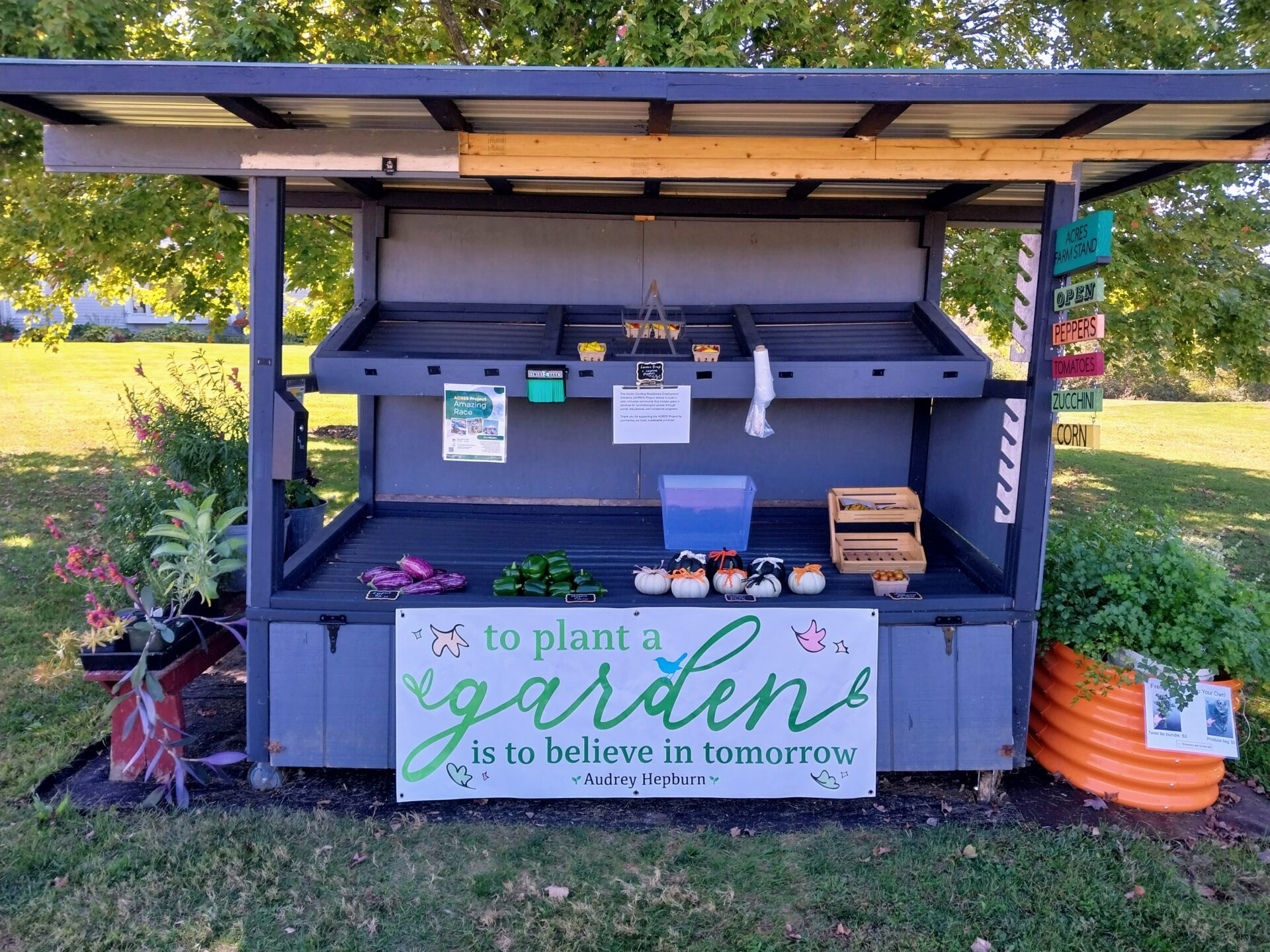
The greenhouse is also home to figs, lemons, succulents, and more. Just outside the greenhouse, a fence protects raised beds filled with an array of lush vegetable plants. Some microgreens are sold at a local market; everything else is offered through the farm stand on-site.
Main House
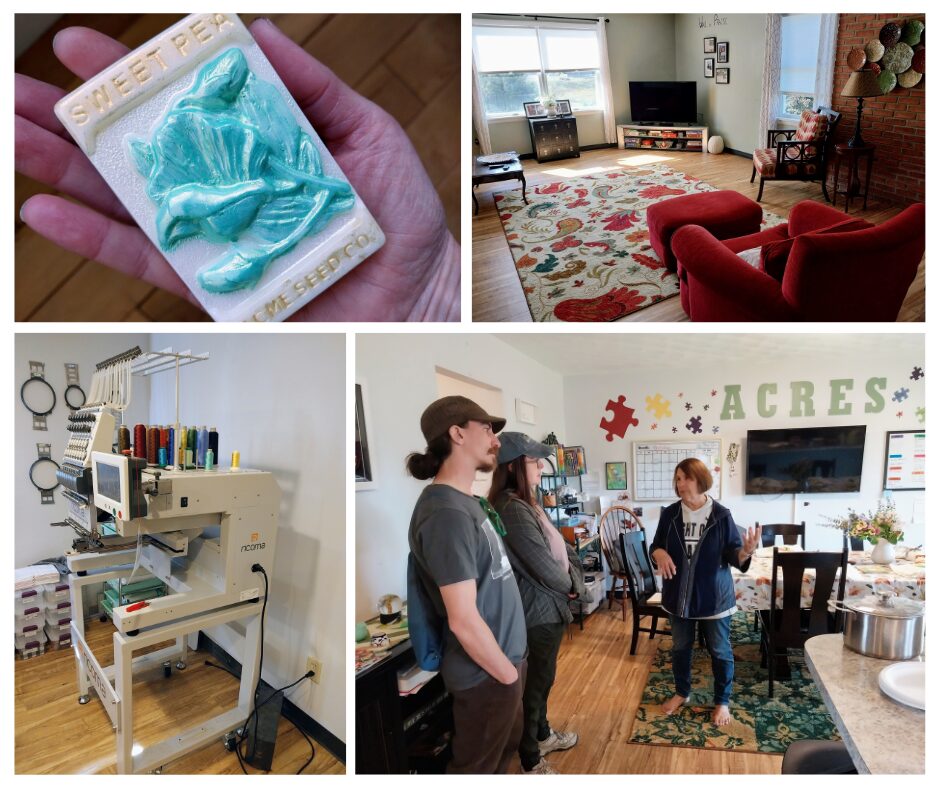
In the main house, Bella showed us the kitchen, which hosts a cooking club. Two social groups meet in the cozy living room–one for adults under 40, and one for adults 40 and over.
In the basement, one work room is dedicated to creating bars of goat milk soap. Employees are tasked with selecting molds and colors for soap batches. “We use a lye-free method to keep things safe and simple,” noted Bellamarie. “The great thing about making bars of soap is that mistakes are no big deal. If some bars turn out wonky, we can melt them down and start over.”
ACRES purchased an industrial embroidery machine thanks to a grant. One employee took a fast interest in learning to use it; they now have their own embroidery business housed at ACRES.
The second floor apartment is rented short-term to the general public as supplemental income. ACRES employees are responsible for cleaning the space and preparing it for guests.
CFN’s Lessons Learned
When CFN staff gather with members, we want to hear:
- What challenges are you experiencing?
- How can CFN better serve you?
Bella shared a top challenge for ACRES Project: Being taken seriously by restaurants and other potential buyers as a small, non-profit care farm. The group brainstormed strategies and resources to help educate the greater community, such as a virtual tour or short video that gives an inside look at their operation, growing methods and record-keeping, and shows their employees in action.
These conversations inform our additions to the Resource Library, as well as conference and webinar topics. The CFN team hopes to continue expanding the support we offer around advocacy and educating the public about care farming.