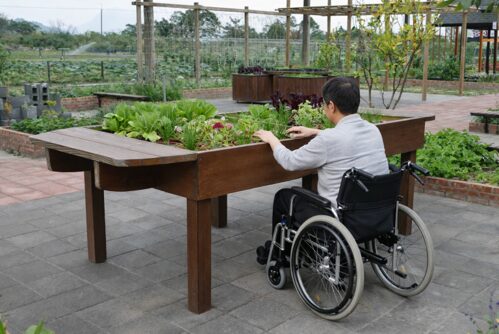
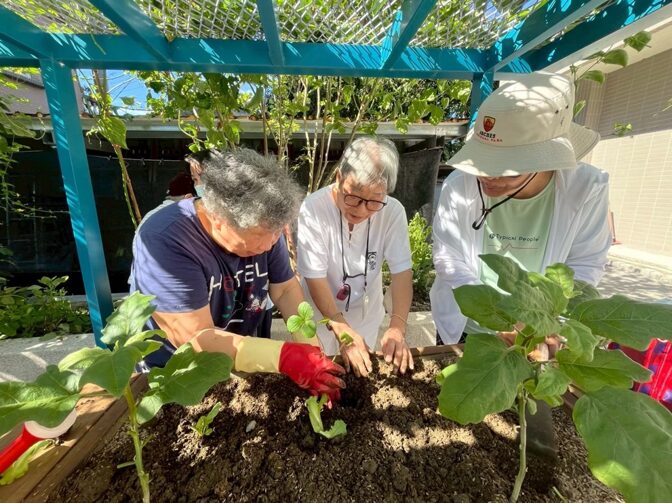
A well-designed healing garden isn’t just a landscaping feature. It’s part of the caregiving infrastructure. Yet research keeps turning up beautifully planted gardens in long-term care (LTC) facilities that residents barely use. This post covers what healing gardens actually are, the design principles that make them work for older residents, and a real example: the two healing gardens recently built at Fo Guang Shan Lanyang Jen-Ai Home in Yilan, Taiwan.
The Problem Beautiful Gardens Don’t Solve
A recurring finding in Quiroz & Cruz’s research (2026) is blunt: healing gardens that institutions design without asking users what they want to tend to become “bonus features” — attractive in photos, empty in practice. Gardens developed with genuine user participation, by contrast, see stronger attachment and far more everyday use. That distinction shaped the entire design process at Lanyang Jen-Ai Home.
Two Gardens, Two Populations
The project comprises two gardens, developed over roughly six months through a participatory design process, both opened to residents in April 2025: a 470 m² open-air garden on the ground floor for the assisted-living wing, and a 40 m² enclosed rooftop garden on the fourth floor for the long-term care wing. Rather than building one garden to serve everyone, the design team split the program around two very different resident profiles.
Learn about design principles, as well as design features and results in these two garden spaces, in the full case study: