GAAMHA
GAAMHA, Inc. is a nonprofit behavioral health agency based in Gardner, Massachusetts. They integrate clinical care, housing, employment, transportation, and peer support to build a recovery ecosystem that fosters long-term wellness, independence, and recovery.
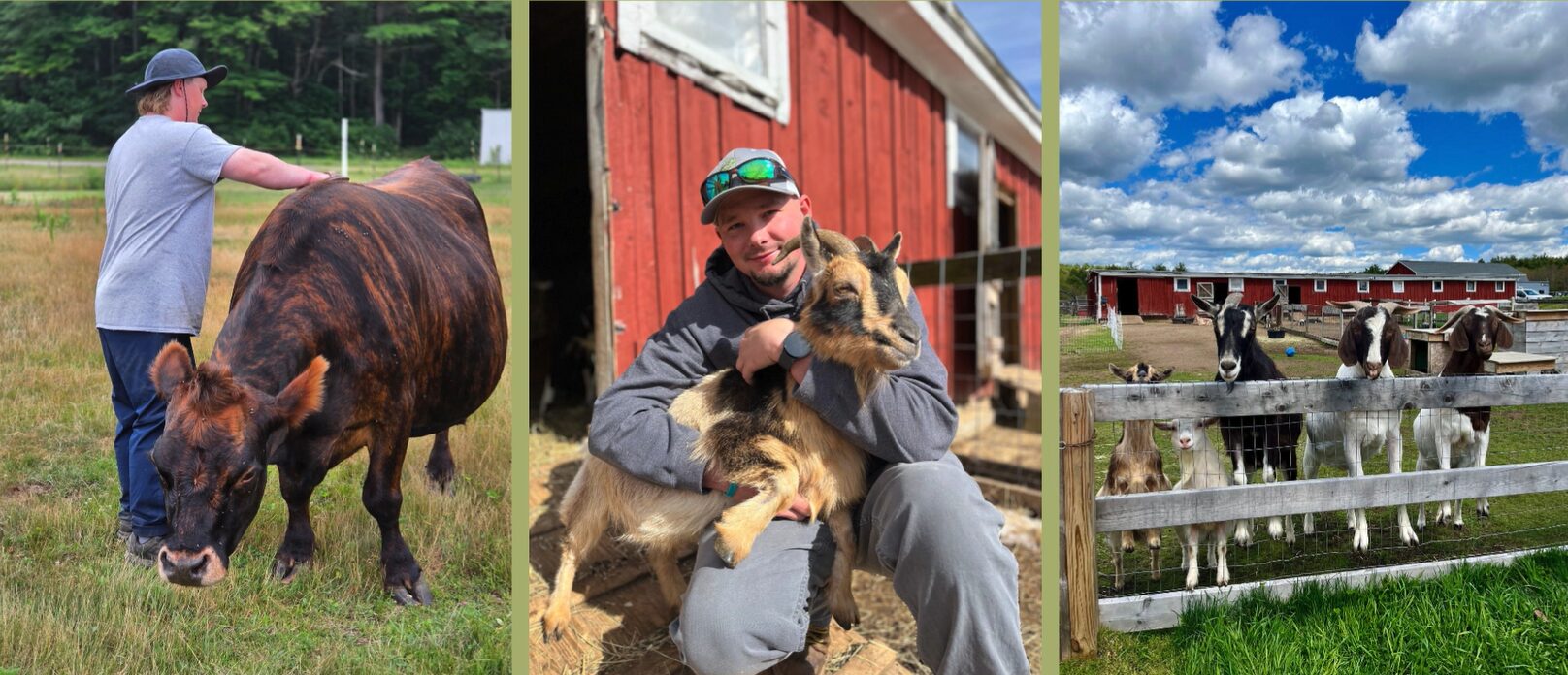
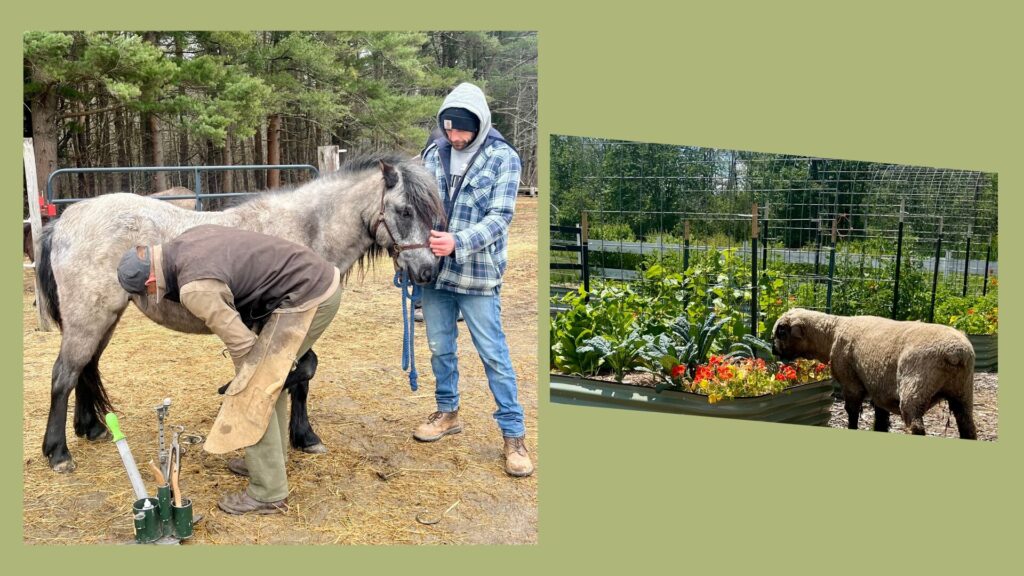
GAAMHA’s care farming work is based at Evergreen Grove, a 115-acre equestrian estate. Evergreen Grove is home to two programs: the Carl E. Dahl House, a 16-bed residential treatment community for adult men with co-occurring substance use and mental health conditions, and R.O.O.T.S., a free outpatient program for young people ages 12–24. Licensed clinicians and dedicated farm staff work side by side, using the daily care of roughly 75 rescued animals — horses, goats, pigs, alpaca, sheep, chickens, and one of the country’s largest herds of endangered Newfoundland ponies — as a clinical tool for building purpose, responsibility, and lasting recovery.
GAAMHA's Mission
GAAMHA exists to create a world where people can access help when they ask for it, no matter who they are. At Evergreen Grove, that mission takes the form of farm-based, clinically-grounded treatment that helps people build the sense of purpose and connection that traditional treatment settings often struggle to provide.
Farm Snapshot
Location
Gardner, Massachusetts
Founded
First care farm site piloted in Athol, MA, in 2017; closed in 2020 after the model proved unsustainable there. Evergreen Grove acquired in 2020. The Carl E. Dahl House opened in 2021; R.O.O.T.S. opened in 2022. GAAMHA has operated residential treatment programs since 1972.
Farm Size
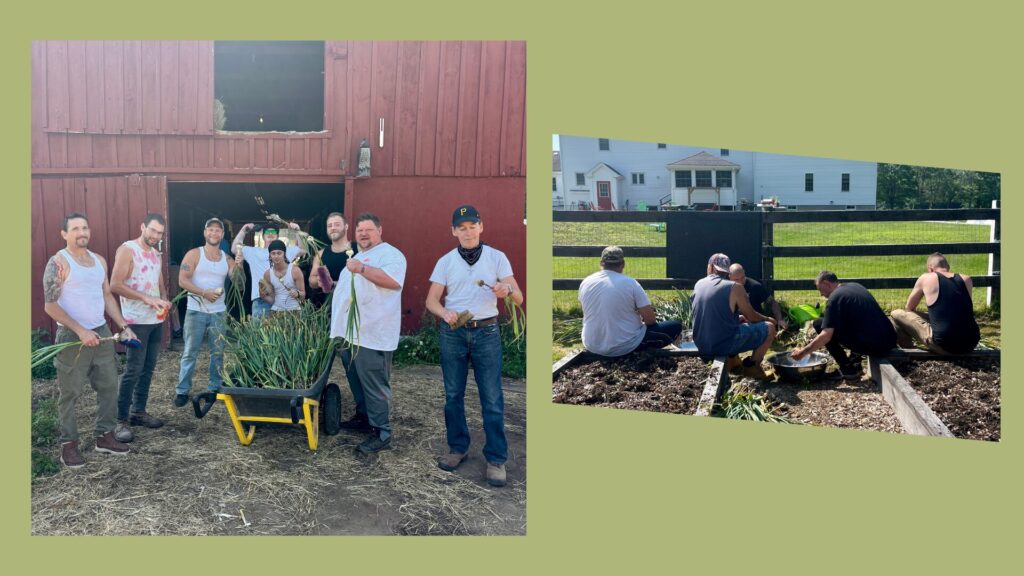
115 acres. Includes ~15 acres and two barns in active use for livestock, ~6,000 sq. ft. garden, and forested areas used for hikes
Business Structure
Program of GAAMHA, Inc., a 501(c)(3) nonprofit human services agency
Staffing
~29 staff across both farm programs, including program directors, clinical supervisors, clinicians, a care coordinator, a psychiatric nurse practitioner, an RN, recovery specialists, and a dedicated animal care team
Operating Budget
~$3.5 million/year across both farm programs. About two-thirds (~$2.1 million) comes from Medicaid billables through the Carl E. Dahl House; R.O.O.T.S. is funded through a state cost-reimbursement contract with the MA Department of Public Health. Medicaid dollars cannot fund animal care, so GAAMHA’s development team raises $300,000–$500,000 every year to support the animals through grants, earmarked funding, community foundations, small donors, and events like an annual Christmas tree sale.
Programs & Services
- Carl E. Dahl House: Residential; 16 beds for adult men with co-occurring mental health and substance use diagnoses
- R.O.O.T.S.: Outpatient program for ages 12–24 offering weekly sessions. 24-week curriculum includes Equine Assisted Learning and barn work
- New women’s and children’s care farm campus in development
Who They Serve
Adult men with co-occurring substance use and mental health conditions; young people ages 12–24 struggling with substance use and mental health challenges; soon, women in recovery and their children
ORIGIN
GAAMHA’s care farm began as what President and CEO Shawn Hayden calls “a happy accident.” GAAMHA has long offered aftercare housing following residential treatment, and the agency was searching for a new supportive housing site in 2017. They needed a building with numerous bedrooms and bathrooms, plus a large shared kitchen. A colleague found a promising lead in Athol, Massachusetts: a farmhouse built in the 1820s. Only after they were halfway there in the car did she mention that the house came with a couple of pigs, a couple of goats, and a horse. The owner needed someone to take on the animals as part of the lease. Hayden, a self-proclaimed “city guy” with no farming background, agreed anyway.
For the first several months, Hayden and other staff members volunteered to leave home at 4am to care for the animals before starting their day jobs. Hayden recalls, “There was a ton of enthusiasm within the organization for our crazy farm idea, and no shortage of people who helped it succeed!”
Once residents moved in, staff began noticing something unplanned: a subset of residents gravitated to the barn, unable to fully explain why they felt drawn to the animals. Data soon bore out what staff were observing: residents who engaged with the animals were showing better outcomes. Meanwhile, GAAMHA’s business office was asking confused questions about invoices for pig feed.
That pattern sent the team looking for a name for what they’d stumbled into. They learned about care farming and set out to connect with established care farms nearby, including Gould Farm in Monterey, Massachusetts and Spring Lake Ranch in Vermont. What they couldn’t find was a peer care farm focused on substance use disorders; most cared for people with psychiatric conditions or intellectual and developmental disabilities. GAAMHA had to build its clinical model largely on its own.
The early years were expensive. After about two years and roughly half a million dollars in losses trying to make the model financially sustainable, GAAMHA’s board told Hayden the program had to be wound down, giving him a three-month window. In that window, a different property came on the market — closer to headquarters and suited to becoming a fully licensed, ADA-accessible treatment facility. Hayden pitched the board on a counterintuitive solution: to stop losing money, GAAMHA needed to spend more of it, building a facility that could bill Medicaid. The board approved it. GAAMHA acquired Evergreen Grove in 2020, opened the Carl E. Dahl House in 2021, and opened R.O.O.T.S. in 2022.
PROGRAMS, STAFFING & OPERATIONS
The Carl E. Dahl House
Men who seek treatment at the Dahl House have co-occurring substance use disorder (SUD) and mental health conditions, and in many cases, they have spent years cycling through programs that treated one issue but not the other. GAAMHA’s original 1972 program (Pathway House) graduates participants at roughly a 50% rate, well above the Massachusetts statewide average of 28–32%. But that success rate stirred a question within the agency: what about the other 50%?
Staff recognized that residents with more significant co-occurring mental health needs were the least likely to succeed in a standard, cohort-paced program. The Dahl House was built specifically for them: a person-centered model rather than a cohort model, with a much more robust staffing ratio (roughly three or four clients per clinician). This allows residents to move at their own pace between good days and bad ones.
Residents typically stay 6 to 9 months at no cost to them, covered by a benefit through MassHealth, the state Medicaid program. Participation in animal care is voluntary but strongly encouraged; nearly everyone chooses to take part. When a rare resident opts out, it’s typically a sign that the program isn’t the right fit for them.
R.O.O.T.S.
R.O.O.T.S. is a free outpatient program for young people ages 12–24. Participants typically attend one session per week over a 24-week curriculum that includes Equine Assisted Learning, barn work, building projects, arts and crafts, and hikes through Evergreen Grove’s forest.
The program grew out of a call from the Massachusetts Department of Public Health’s Office of Youth and Young Adult Services, which was looking for more effective interventions for young people struggling with substance use and mental health. GAAMHA partnered with the department to help write the funding solicitation its program would ultimately be awarded. They received up to nine years of pilot funding toward two goals: prove the intervention works, and build a case–with data–for care farming as a reimbursable, diversionary alternative to emergency departments and inpatient psychiatric care.
Clinically, R.O.O.T.S. runs like other outpatient programs–with biopsychosocial assessments, PHQ-9 and GAD-7 screenings, an individualized treatment plan–but sessions happen outdoors, with no clinical building or clinical attire. Therapists build session plans around each young person’s interests, whether that’s horses, goats, or pigs. Many participants, particularly youth from urban settings, have no prior experience with farms or animals at all.
National data on outpatient treatment retention for young people is poor, with most participants dropping out within two to four sessions. At R.O.O.T.S., the average length of stay exceeds the full 24-week curriculum — young people, as staff put it, simply don’t want to leave.
The farm setting also changes how difficult conversations happen. For example, rather than asking a young person to describe painful family dynamics directly, clinicians can start with observing herd dynamics together and asking what feels familiar. Many R.O.O.T.S. participants have lost a parent to overdose, and because GAAMHA cares for elderly and sick rescue animals, loss is something the farm experiences regularly, too. This gives clinicians a metaphorical, lower-stakes way to open conversations about grief before approaching it directly.
The Farm and the Herd
At Evergreen Grove, two barns anchor daily operations: a “small barn” that houses goats, pigs, alpaca, sheep, and chickens, and a “big barn,” used mainly for hay storage and as shelter during severe weather. Horses live on 24/7 turnout (in an outdoor setting) with access to run-in sheds rather than being stalled–a decision the farm made after learning that horses do best outdoors.
The herd includes miniature horses, two full-size horses, and 11 Newfoundland ponies — a rare breed with only around 500–600 remaining worldwide. GAAMHA formed a partnership with the Newfoundland Pony Conservancy Center after learning the conservancy was at risk of losing its own farm around the same time GAAMHA’s care farm was opening its doors. GAAMHA now hosts what may be the largest herd of Newfoundland ponies in the United States. Their manageable size and famously friendly temperament make them especially well suited to participants with no prior equine experience.
Animal care groups and chores rotate roughly every two weeks, but assignments aren’t one-size-fits-all. Someone with prior riding experience might work with horses from day one, while someone with no farm background often starts with smaller animals like goats or pigs. Staff work with the clinical team to match residents to animal groups–and sometimes to specific peers–based on individual recovery goals: e.g. building patience by pairing someone with an animal or peer that challenges them, or building confidence by starting with a lower-stakes animal group and working up.
Staffing
Between the two programs, Evergreen Grove employs about 29 staff members. The Dahl House team includes a program director, a clinical supervisor, three clinicians, a care coordinator, a psychiatric nurse practitioner who visits several times a week, an RN on-site five days a week, and a rotating team of recovery specialists providing 24/7 coverage. R.O.O.T.S. has its own program director, clinical supervisor, and clinicians.
The animal care team runs separately from clinical staff,a lesson GAAMHA learned the hard way after early attempts to have case managers split time between client work and barn chores led to burnout. Today, dedicated animal care staff work full-time on the farm and collaborate closely with clinicians rather than filling both roles themselves. That team includes a human-animal interaction specialist and Dahl House program graduate, who runs one-on-one sessions helping current residents build animal-handling skills. Weekend farm support comes from a staff member (also a program graduate) who volunteers additional hours simply because he enjoys being there.
Staff turnover on the farm programs runs well below what GAAMHA typically sees across its programs agency-wide.
Explore Carl E. Dahl House with this 3-minute video:
Successes
- Programs built for the people traditional treatment leaves behind. GAAMHA’s person-centered model and rich staffing ratio better serve individuals with co-occurring substance use and mental health diagnoses.
- Retention that far outpaces the field norm. e.g. Nationally, most young people drop out of outpatient treatment within two to four sessions. At R.O.O.T.S., the average length of stay exceeds its full 24-week curriculum.
- A durable, mission-aligned funding model. Structuring the farm as a licensed treatment facility let GAAMHA bill Medicaid for clinical care, covering roughly two-thirds of the farm programs’ $3.5 million annual budget and making long-term sustainability possible after financial losses in the early years.
- Staff who stay. Farm program staff turnover is far lower than GAAMHA sees elsewhere in its substance use and I/DD programs. Several key animal care staff are program graduates.
- Independent research validating the model. A qualitative study of residents’ treatment experience found that many wanted to maintain their connection to animals as a lifelong recovery practice. A University of Pennsylvania study found that GAAMHA goats that self-selected into interacting with residents showed measurable physical health improvements.
- A conservation partnership. GAAMHA’s collaboration with the Newfoundland Pony Conservancy Center has made Evergreen Grove home to what may be the largest herd of this endangered breed in the United States.
- Responding to unmet demand. After fielding many requests for a women’s program, GAAMHA has acquired a 60,000-square-foot building on 84 acres to build a second care farm campus for women in recovery and their children.
- Funding for program expansion. Last year, GAAMHA received a 3-year, $1.3 million grant for expansion of the Roots program. This major multi-year grant was exciting for their team.
What's been challenging
- Finding staff who can do this work. The skills GAAMHA needs–genuine passion for animal care, clinical credentials, and the resilience to work outdoors through Massachusetts winters and summers–are special ones. As Hayden tells prospective donors, program manuals and schedules can be shared freely, but a team that makes the model work takes time to develop.
- Medicaid can’t pay for animal care. Clinical billing covers treatment, but not a single Medicaid dollar can go toward feeding, housing, or treating the animals. That shifts $300,000–$500,000 in fundraising responsibility onto GAAMHA’s development team every year.
- Caring for rescue animals comes with real costs and real losses. Many of Evergreen Grove’s roughly 75 animals arrive with existing physical or behavioral conditions from prior neglect, requiring ongoing, sometimes expensive care. For example, sourcing low-sugar hay for several insulin-resistant horses alone runs about $7,000. Losing an animal, which happens with some regularity given the population the farm rescues, is never easy for staff or residents.
- Privacy regulations limit community engagement. Because the Dahl House and R.O.O.T.S. operate under HIPAA and 42 CFR confidentiality protections, GAAMHA can’t open up to public visitors and volunteers the way some peer care farms without a clinical model can.
Learn More
CFN Virtual Deep Dive: Watch the full discussion and presentation recording
GAAMHA Website: gaamha.org
Case study prepared by Care Farming Network, with support from GAAMHA