New Growth Project
New Growth Project is a nonprofit (501(c)(3)care farm located in Rockford, Michigan, serving adults with intellectual and developmental disabilities in and around Kent County. Operating on 21 acres of land that has been farmed chemical-free for over 40 years, the New Growth Project employs nearly 20 adults with disabilities in meaningful, paid agricultural and production work, including growing vegetables, crafting handmade goods, and operating a seasonal farm store.
New Growth Project's Mission
New Growth Project provides job opportunities to adults with disabilities by growing nutritious food for the community.
Farm Snapshot
Location: Rockford, Kent County, Michigan
Founded: Established September 2021 · Grand opening May 2022
Farm Size: ~21 acres total, roughly 8 acres in vegetable production (includes hoophouse/greenhouse, farm store)
Business Structure: 501(c)(3) nonprofit
Staffing:
- Executive team: Director of Community Engagement/Marketing, Director of Programming and Farm Operations, Head Farmer
- Staff: Admin Assistant, Events Coordinator, Lead Peer Mentor, seasonal farmhands, and peer mentors.
- A nine-member board of directors
Operating Budget: 2026 annual budget is $622,000. Revenue is 80% from donations — foundations, individual giving, and events — and 20% from program revenue and farm sales. Signature annual events include a Farm Social, Chef Dinner in the Field, and a peer-to-peer fundraiser.
Programs and Services: New Growth Project provides employment opportunities for adults with I/DD, peer mentoring; farm store; CSA; Rockford Farmers Market; Farm Market Delivery; Field & Wick apothecary line; gift boxes; family volunteer days.
Who New Growth Project Serves: Adults with intellectual & developmental disabilities; the wider community through fresh, chemical-free food.
ORIGIN
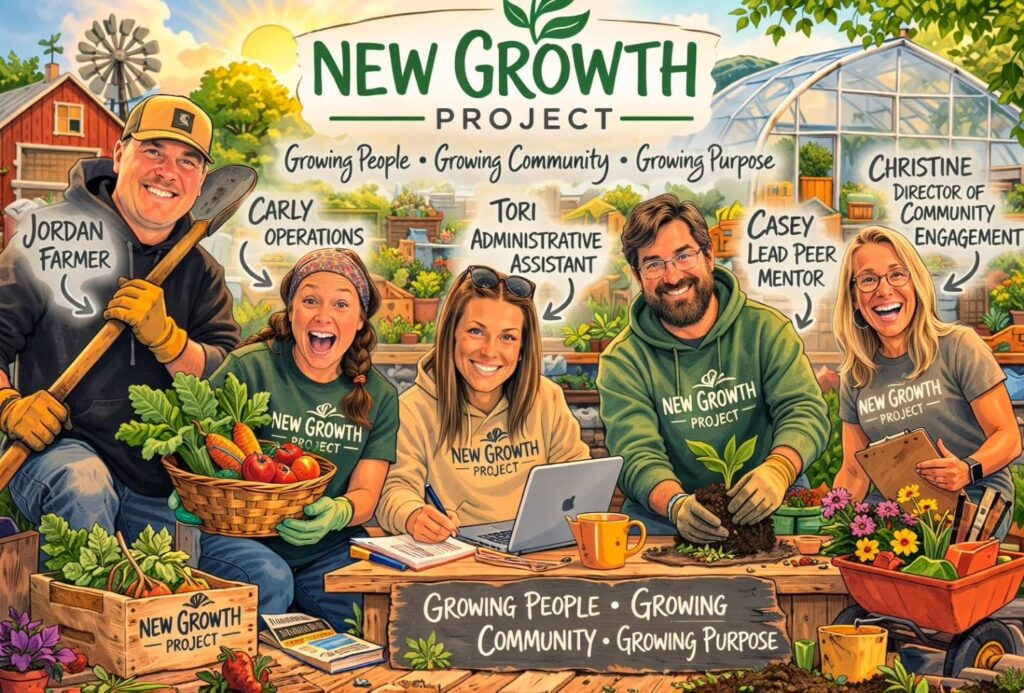
New Growth Project was born from a gap its founders knew personally. Christine O’Driscoll and Carly VanDuinen both have close connections to people with intellectual or developmental disabilities and note that roughly four out of five adults with cognitive disabilities are unemployed. That absence of work too often means isolation, a lack of routine, and a missing sense of purpose. Thus, New Growth Project came to be.
New Growth Project was established in September 2021 and held its grand opening in May 2022, employing about 10 individuals in that first season and running from mid-April through mid-October. It has grown quickly since.
O’Driscoll and VanDuinen had initially explored buying one or two acres in Grand Rapids, with easy bus access a priority. Instead, 21 acres came to them through an acquaintance — land that had been farmed chemical-free for decades and, as they described it, “became part of our vision.” They purchased the property with a loan from a private lender. O’Driscoll and VanDuinen own the land personally and lease it to the nonprofit, a structure they chose intentionally for future flexibility.
Their founding board was built from their own networks: a behavioral specialist, a marketing professional, a well-connected fundraiser, an experienced board member who helped drive board accountability, and an accountant. The board operates as an “advisory board,” providing expertise while preserving operational freedom.
PROGRAMS, STAFFING & OPERATIONS
The Work
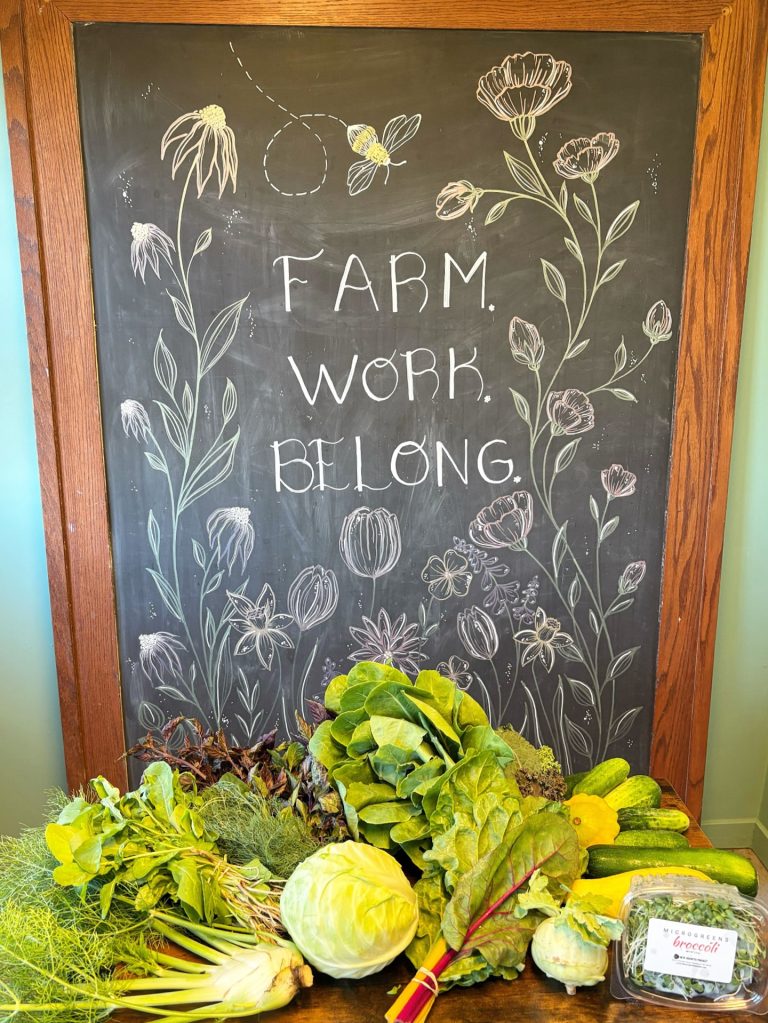
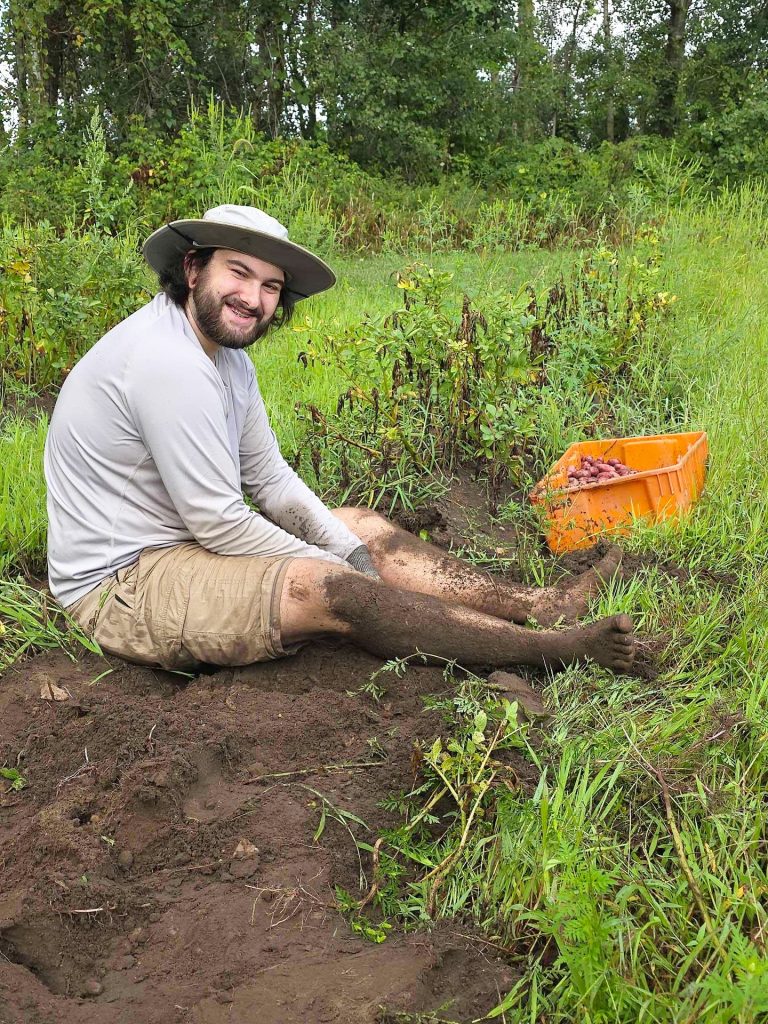
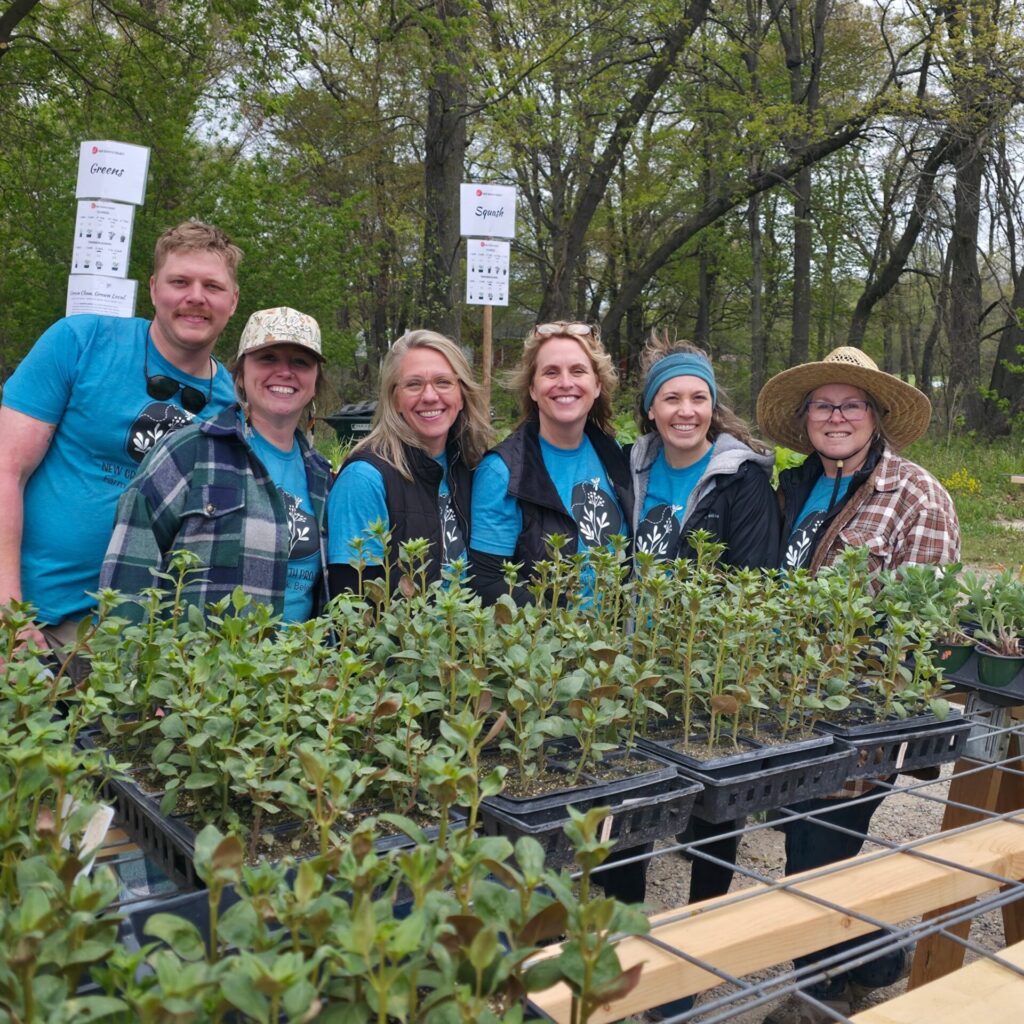
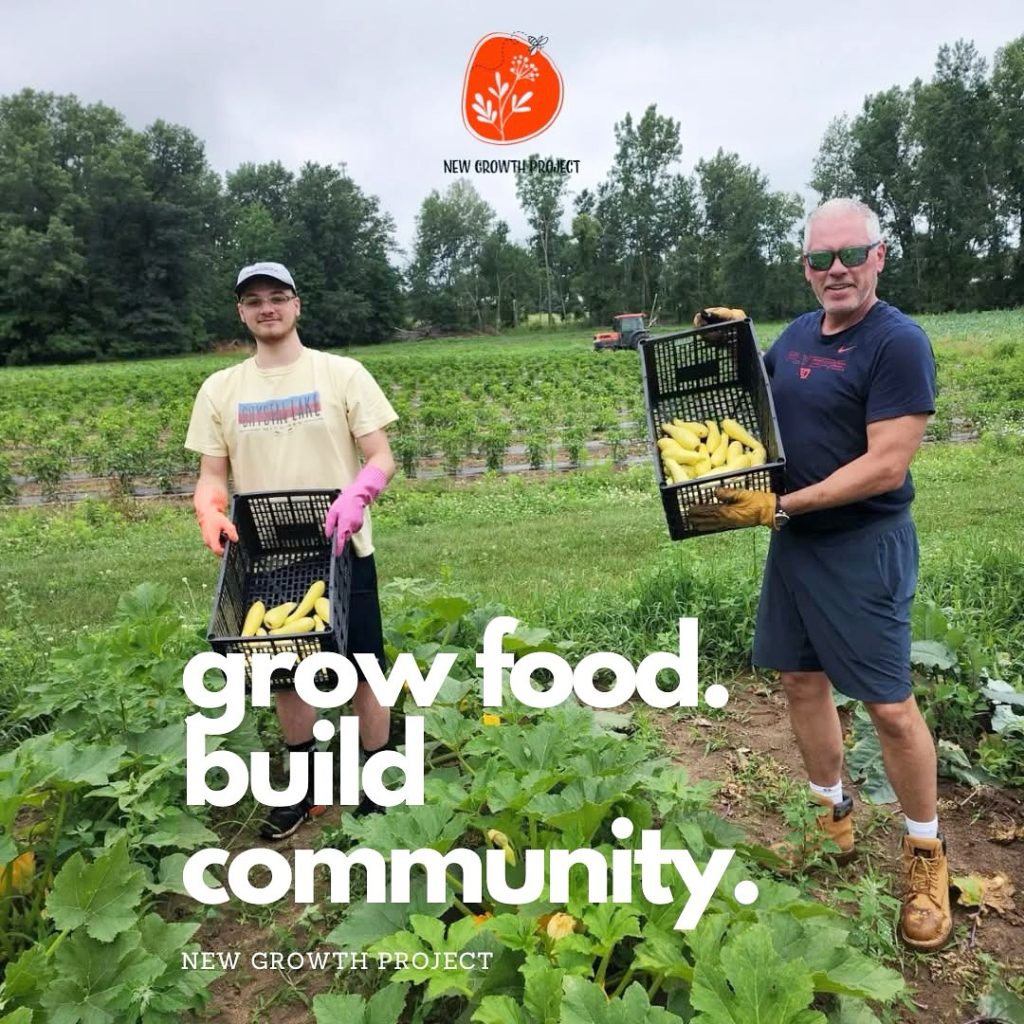
At its core, New Growth Project is a working vegetable farm. Employees are placed first in roles where they can experience immediate success, then supported, through a peer mentoring model, to take on progressively more responsibility. Work includes seeding, transplanting, weeding, harvesting, washing and packing produce, handcrafting the Field & Wick apothecary line (candles, soaps, salt scrubs, room sprays), assembling gift boxes, and staffing the farm store and farmers market.
The farm is MAEAP-certified (Michigan Agriculture Environmental Assurance Program) and grows chemical-free, “better-than-organic” produce. Employees and volunteers plant 90–95% of all seeds.
Field & Wick
Field & Wick grew out of necessity and a really bad candle. The first winter on the farm was quiet, with little for employees to do. Looking for ways to keep people engaged, the team made gift baskets and attempted their first candle. It didn’t go well. But the experience pointed them somewhere important: when they discovered how many harmful chemicals conventional candles contain, they looked for a cleaner way.
Today, all Field & Wick products are made on the farm using organic and certified clean fragrance ingredients, produced and shipped out of a dedicated workshop building separate from the main farm operations. The line is sold online, in local retailers, and through wholesale accounts, and includes custom-labeled products for local vendors. Gift box sales in particular have been a significant driver, enough to make regular winter hours possible for the first time, something the farm had been working toward since its earliest season.
Beyond revenue, Field & Wick solved a real gap in the program. Not every employee thrives in the field, and the production line created a meaningful place on the farm for those individuals, a way to build job skills, contribute to the team, and feel part of something without requiring outdoor work. It took time and experimentation to land on the right model, but Field & Wick has become one of New Growth Project’s most mission-aligned revenue streams.
Accommodations & Adaptive Tools
New Growth Project has leaned into physical and structural accommodations that make farm work genuinely accessible: hand transplanters usable from a standing position, a paper pot transplant system, specialized potato tools, and wheeled chairs that move up and down rows in the field.
For employees who don’t thrive outdoors, the Field & Wick production line offers a niche. Specialized, more independent roles, like one employee who serves as the farm’s dedicated Tool Manager allow workers to develop real expertise.
Staffing, Employees & Volunteers
New Growth Project is led by a three-person executive team (the two founders plus their head farmer) supported by three permanent staff members, with a fourth position coming on soon. Three seasonal peer mentors round out the team during the growing season, and their advisory board of directors guides the organization at a governance level.
Peer mentoring is central to how the farm operates. New employees with disabilities begin with 1:1 support, then transition to a 1:3–5 ratio as they find their footing, with the pace depending on individual needs. Peer mentor roles are paid staff positions. The ratio means that expanding employee capacity means expanding mentorship capacity first.
The farm currently employs 14 adults with disabilities, with scheduling built around each individual. New Growth Project operates Tuesday through Saturday, and shifts range from an hour and a half to nearly 20 hours a week. Flexibility is built in from the start, accommodating the transportation and guardian coordination many employees depend on to get there.
Volunteering serves as a natural on-ramp to employment. Some individuals come to New Growth Project first as volunteers, getting to know the farm and team before transitioning into paid work. For those on the waitlist, volunteer opportunities keep them connected while they wait for a paid position to open. Not all volunteers with disabilities are seeking paid work (some choose not to be paid due to SSI or other benefit considerations) and New Growth Proejct accommodates that fully. Those individuals participate alongside paid employees in everything: the morning stretches, the daily focus word, and the full range of farm tasks.
Job coaches from three area organizations are also part of the picture. Some are on-site for full shifts; others stop by briefly. New Growth Project has largely taken on the job coaching role itself, and has pushed to have outside coaches go through their own training before working alongside employees on the farm. That has pointed toward a bigger question the team is now actively exploring: how to become a place where job coaches and disability support workers come to train.
WATCH NEW GROWTH PROJECT'S VIRTUAL TOUR
Successes
- Employment growth with staying power. New Growth grew from roughly 10 employees with disabilities in its first season to nearly 20 today. Employees who arrived expecting a season or two have stayed for years.
- A peer mentorship model that has taken on a life of its own. New Growth originally assumed the community would volunteer in peer mentor roles. When that didn’t happen, they pivoted to hiring peer mentors as paid staff. New employees begin with 1:1 support, then move to a 1:3–5 ratio as they build confidence and independence. The favorite development, as one founder described it, is what happens next: employee-to-employee mentoring. As employees become skilled at specific tasks, they naturally begin teaching newer employees or those who need more support, turning participants into teachers.
- Skills that carry home. Families have reported that employees bring new skills and confidence back into their daily lives — an outcome that extends the farm’s impact well beyond the workday.
- A diversified, mission-aligned revenue base. From the farm store and CSA to restaurant partnerships and the Field & Wick line, New Growth has built multiple revenue streams that reinforce rather than distract from the mission.
- Chemical-free, certified growing. The farm earned MAEAP certification and has sustained fully chemical-free practices on land farmed that way for more than 40 years.
- Deep community integration. Partnerships with schools, job coaching businesses, a university dietetics program, rehabilitation facilities, and local employers have woven New Growth into the fabric of its region.
What's been challenging
-
Demand that exceeds what one farm can hold. On average, 2 to 3 people with disabilities call, email, apply, or stop by the farm looking for work every week. The need in Kent County is heavy, and it extends beyond what New Growth can absorb on its own. A local job coaching business has already reached out asking if New Growth would consider opening a second location on the south side of Grand Rapids to serve their clients.
-
Transportation. Many employees rely on guardians or families for rides, which requires scheduling flexibility the farm has had to build in deliberately. A regional bus system exists but is not consistently reliable. New Growth has begun exploring rideshare partnerships with other nonprofits as a potential solution.
- Grant funding. New Growth has not yet secured significant grant support. The team is actively working to change that while maintaining their commitment to building toward 50% product-based revenue.
Learn More
CFN Virtual Deep Dive: Watch the full discussion and presentation recording
New Growth Project Website: thenewgrowthproject.org
Case study prepared by Care Farming Network, with support from New Growth Project