by Renee Berg
Grant, Minn. — Sarah Kramer likes the three cats.
Chad Bracewell favors the goats.
And Molly Thompson enjoys the sheep.
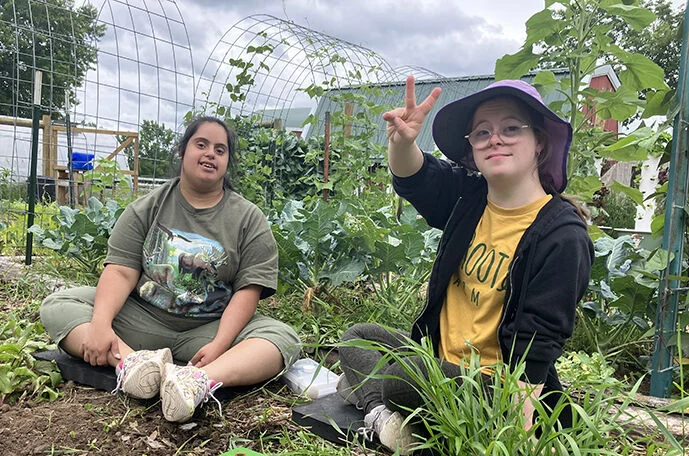
The three farmers, as they’re known at 21 Roots Farm in Grant, Minn., have developmental disabilities and report to the farm each week for a variety of duties.
The nonprofit’s mission is to transform the lives of people impacted by developmental disabilities by enhancing skills fostering independence and creating meaningful opportunities through nature and agriculture.
“I think our work is letting the farmers speak for themselves,” said Georgia Meyer, agricultural supervisor at 21 Roots Farm. “We’re guides here at the farm. We do a good job of letting farmers explore what they’re working on, and we’re here to support them.”
“There’s nothing more beautiful than eating the fruits of your labor,” said Brittany Wiitala, 21 Roots Farm co-founder. “That’s been really fun. When people aren’t familiar with food, they’re more likely to try it if you grew it. That’s one of the special things here at the farm.”
21 Roots has a 60-tree apple orchard, the aforementioned animals along with alpacas, donkeys, cows and chickens and a restored prairie. It’s on a 26-acre spread near Stillwater and features sheds, historic barn and a dwelling for some staff.
They also run a small CSA. This coming summer will be 21 Roots Farm’s eighth season.
One parent of a 21 Roots farmer said the farm gives her daughter a chance to be outside gardening and learning about the animals. “21 Roots Farm gives our kids, teens and adult children with special needs a sense of normalcy that 20 years ago would never have existed,” she said in an online testimonial. “It’s a chance for them to be active, learn and do some farming.”
Wiitala said she and her fellow 21 Roots co-founder Amy Peterson had experiences with people with intellectual disabilities and were looking for ways to connect them to the land.
Society as a whole doesn’t always know where its food comes from, Wiitala said, and this population is even more removed from that. “It’s valuable work with opportunities to connect to nature,” she said. “And animals have a very therapeutic way of reaching people.”
Currently, 21 Roots has about 30 to 40 farmers. They come from the area surrounding Grant.
As part of its work experience program, 21 Roots farmers undertake seasonal planting, harvesting and packing of produce boxes. They also create farm-made products such as soap, balms, lotions, dryer balls and other handcrafted goods. In addition, farmers enjoy woodworking, animal care, routine farm maintenance and select construction projects.
During its Wednesday workshops, farmers attend community-style educational classes led by local experts. They cover a wide range of topics from chicken care to barn quilting, and offer a fun and engaging learning experience within the beauty of the farm, the 21 Roots website says.
Wiitala said the environment at 21 Roots Farm is collaborative. The farmers are given opportunities to lead and receive the adaptive training they need to do farm work.
“We wanted to create experts,” she said. “We have seen that play out. When someone steps on the farm, no one knows more than our farmers. And that’s pretty magical.”