Social Farming Ireland is marking 10 years of the national network today (Friday, April 24) as it holds a national conference in Co. Laois.
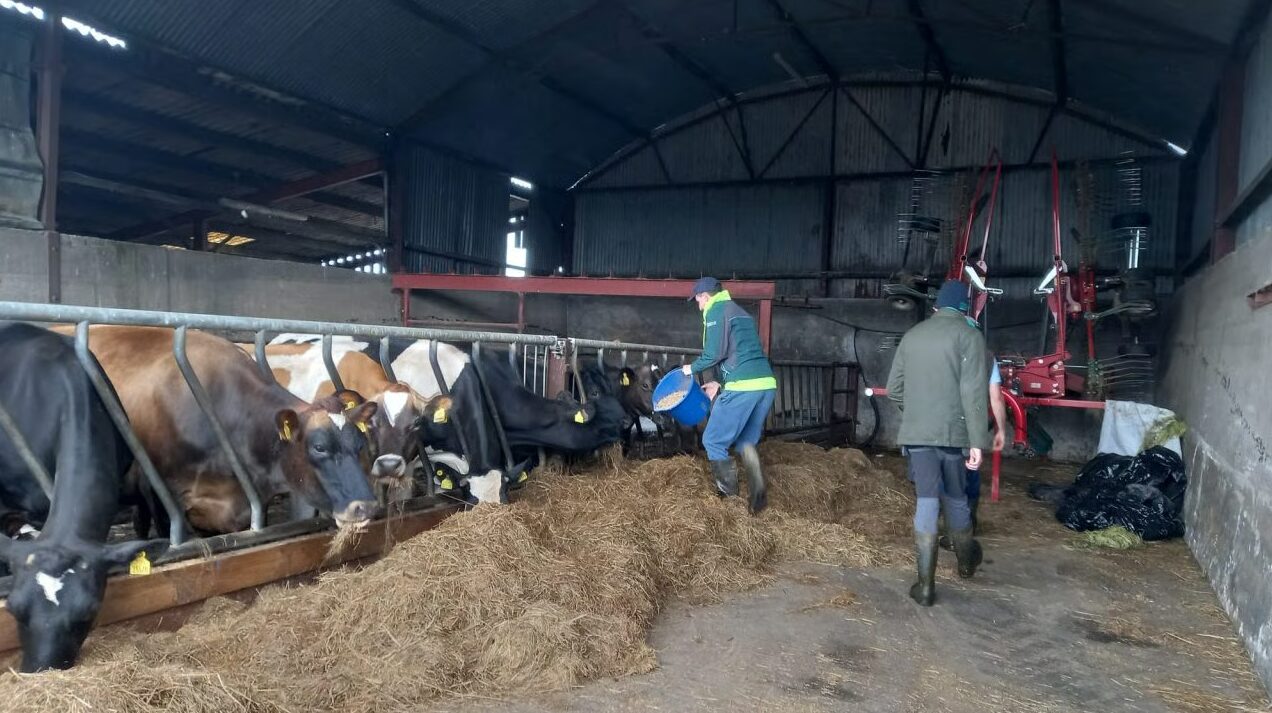
Social farming is the practice of providing outcome-based support placements on a family farm.
Social Farming Ireland was established in 2016 with core funding from the Department of Agriculture, Food and the Marine (DAFM).
Over the past decade, the network has grown from seven social farms to now include over 200 trained social farmers.
The farms engage with service providers, families, and advocates across disability, mental health, social care, education, justice, and community development sectors.
In 2025, social farmers provided more than 10,300 placement days, supporting participants across a wide range of health, social care and community settings.
Social farming ‘enhances lives’
Social Farming Ireland’s Brian Smyth said farmers across the country are opening their farms up each week, allowing a “wide range of people to benefit from this particular support”.
He added that social farming is important in terms of connection with community, diversification of farms but also in sustaining farm families in rural communities.
For all of those involved, it “enhances lives”, Smyth said.
Speaking at the conference, Minister for Agriculture, Food and the Marine, Martin Heydon said that this support is having “transformational impacts” on people’s lives.
He added that being a host farm reduces risks of loneliness and isolation by creating new connections.
According to Minister Heydon, at a European level, Ireland is seen as a “leader” in social farming.
Opportunity
The network offers people who are socially, physically, mentally or intellectually disadvantaged the opportunity to spend time on a family farm in a healthy, supportive, and inclusive environment.
It also aims to create opportunities for farmers to reconnect with their local communities through opening up their farms as a community-based support.
Farms that take part are not specialised and are ordinary working farms.
They can “vary greatly in size and activity, from a 1ac horticulture-only unit to a 700ac dairy farm”, Social Farming Ireland said.
“There are all types of farms including suckler and dairy herds, equestrian, tillage, sheep, goats, forestry and many mixed farm enterprises.”
The network is interested in hearing from farmers who have the time to “devote to supporting people on their farms”, and have the capacity to provide a “variety of meaningful activities for participants and be a safe welcoming environment”.