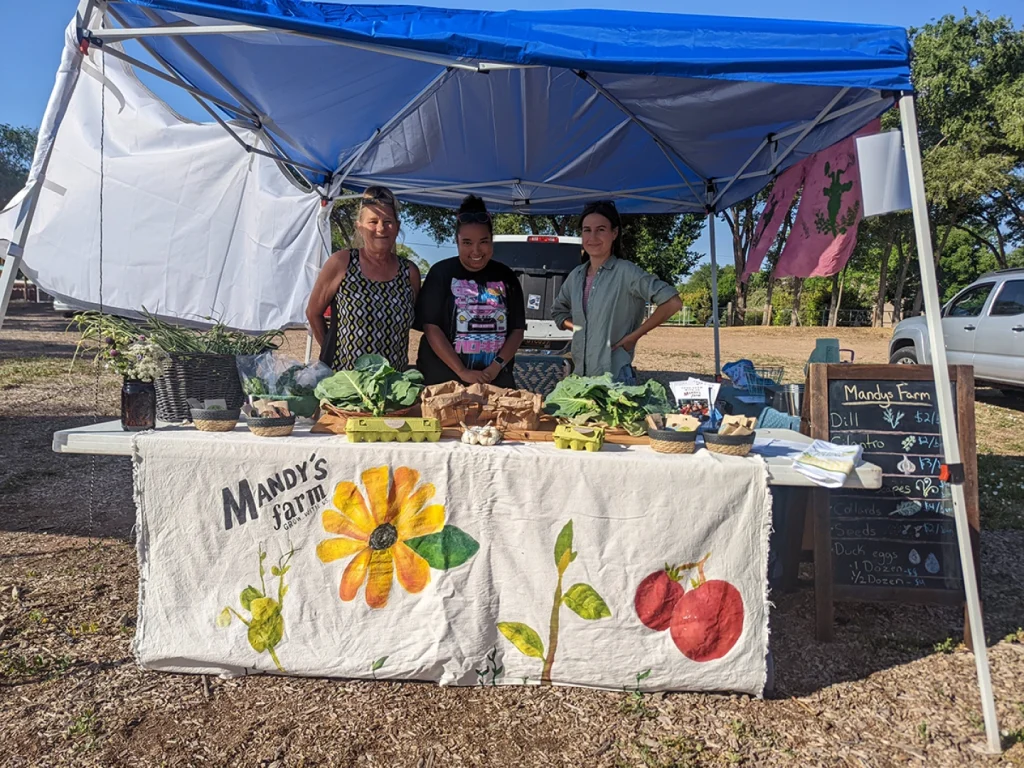
Mandy’s Farm, an AgrAbility partner program, hosts an agricultural program that teaches farming, fosters individual growing interests and supports employment.
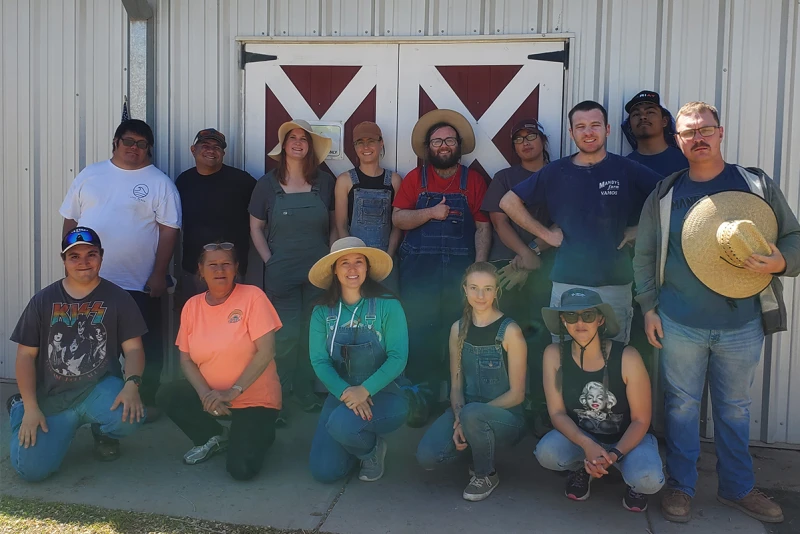
(Photo courtesy of Mandy’s Farm)
A growing program in New Mexico is helping connect adults with disabilities to farming.
On July 16, the USDA-funded AgrAbility program hosted the first of its National Training Workshop Encore Webinars for 2025. The event featured Sophie Trusty, program director at Mandy’s Farm. She spoke about the farm’s Adaptive Apprenticeship Program, which helps adults with intellectual and developmental disabilities learn farming skills and find agricultural job placement within the community in the Albuquerque area.
“AgrAbility is a USDA-sponsored program that assists farmers and ranchers and other agricultural workers with disabilities,” says Tess McKeel of Goodwill of the Finger Lake Team, an AgrAbility partner, who emceed the webinar. She explains that the national program partners with land grand universities that offer disability services organizations and that there are currently 21 state projects.
Mandy’s Farm is one of those state projects.
“Mandy’s Farm is the nonprofit partner in the New Mexico AgrAbility project,” Trusty says. She explained that the farm started in 2000 as a way to provide supportive residential living services initially to women with autism, but has since expanded to serve other people within the community.
“We had had this agricultural site for many years and started hearing more and more community need and interest and interest around agricultural programs and how that intersects for folks with disabilities towards employments,” Trusty continues. “That led us to being approached to be the nonprofit partner in the New Mexico AgrAbility project.”
About the Adaptive Apprenticeship Program
The Adaptive Apprenticeship Program started its first full-time apprenticeship cohort in February of 2023 with nine participants. It is a two-year program consisting of 1,800 hours of classroom instruction and field work. The program is facilitated by a pair of program managers who oversee daily operations and the curriculum, as well as program assistants who work directly with the apprentices.
Occupational therapy students from the University of New Mexico also partner with Mandy’s Farm, providing additional support to apprentices.
“The occupational therapy field work students completing their practicum have the option to choose Mandy’s Farm’s AgrAbility Apprenticeship program as their field work placement, so we are often very lucky to have those OT students working with us for part of the program,” Trusty says.
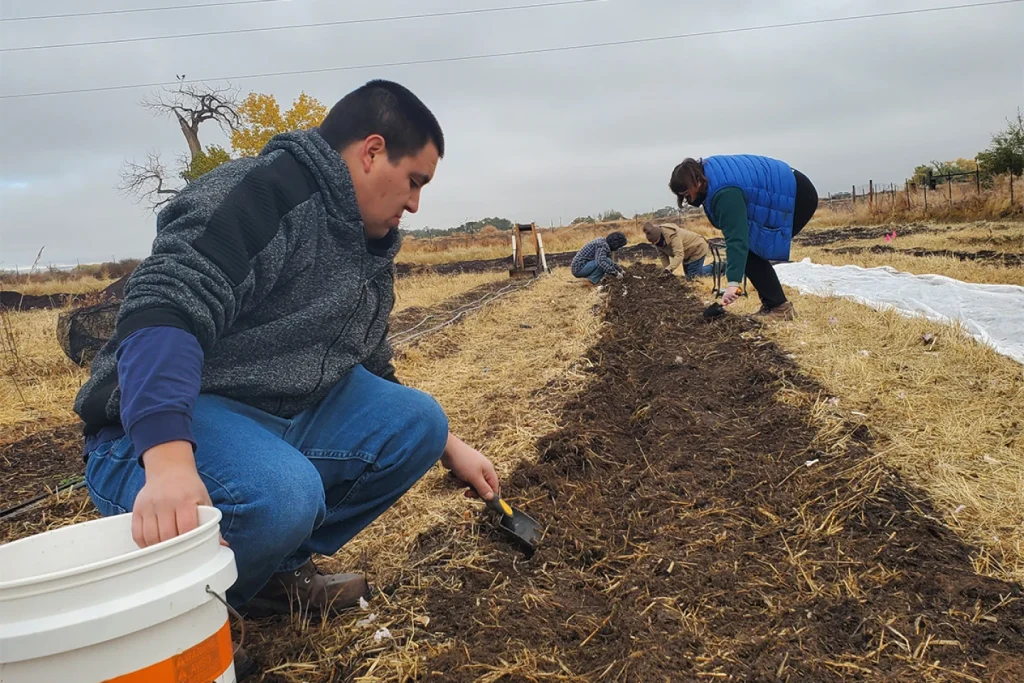
She explains that the first year of the program generally covers ag basics and classroom time, while the second year focuses on apprentices working off-site at nearby community farms and planning and working on their personal plots at Mandy’s Farm.
Trusty reports the current crops at the farm include beans, cabbage, collard greens, corn, herbs, melons, okra, peppers, squash, sweetpotatoes and tomatoes, with the tomatoes and peppers being particular favorites last year. In addition to their personal plots, the apprentices have a lot of input in what gets grown at Mandy’s Farm. She says this year the farm has a few experimental rows of garbanzo beans and quinoa, for instance.
“We like the apprentices to have a lot of input on what will be grown because that’s way more fun and they are able to get a wide variety of knowledge on different crops,” Trusty says. “A lot of the small farms in Albuquerque are very diversified, mixed vegetable production. So, hopefully that gives them some experience that would be helpful at other farms.”
(Photo courtesy of Mandy’s Farm)
Apprentices receive a $600 monthly stipend funded through the state’s division of vocational rehabilitation for all of their work during their apprenticeship. This is a very important detail, Trusty says.
“We have a strong value at Mandy’s Farm around paid work for folks with disabilities and intellectual disabilities, and we focus on transitioning our students out of the program and into community integrated employment,” she says.
That focus shows up in the final months of the apprenticeship, Trusty adds.
“For the last several months of the program before they graduate, [apprentices] receive intensive job development support,” she says. “That is a classification of supported employment where we support them with getting placed in a community employment setting at the end of their apprenticeship.”
Past apprentices and the current cohort
Seven members of the first cohort of apprentices graduated the program in December of 2024. Trusty says several of that cohort are in agricultural or ag-adjacent jobs.
“We have someone working at a greenhouse, we have someone working doing landscaping for a local hotel, and we have two folks at a compost facility,” Trusty says. She adds that Alejandro, who works as the hotel landscaper, “has just been loving his job.”
“He’s been so successful,” she says. “It’s just been really incredible to see our graduates in their new jobs and how happy and successful they are.”
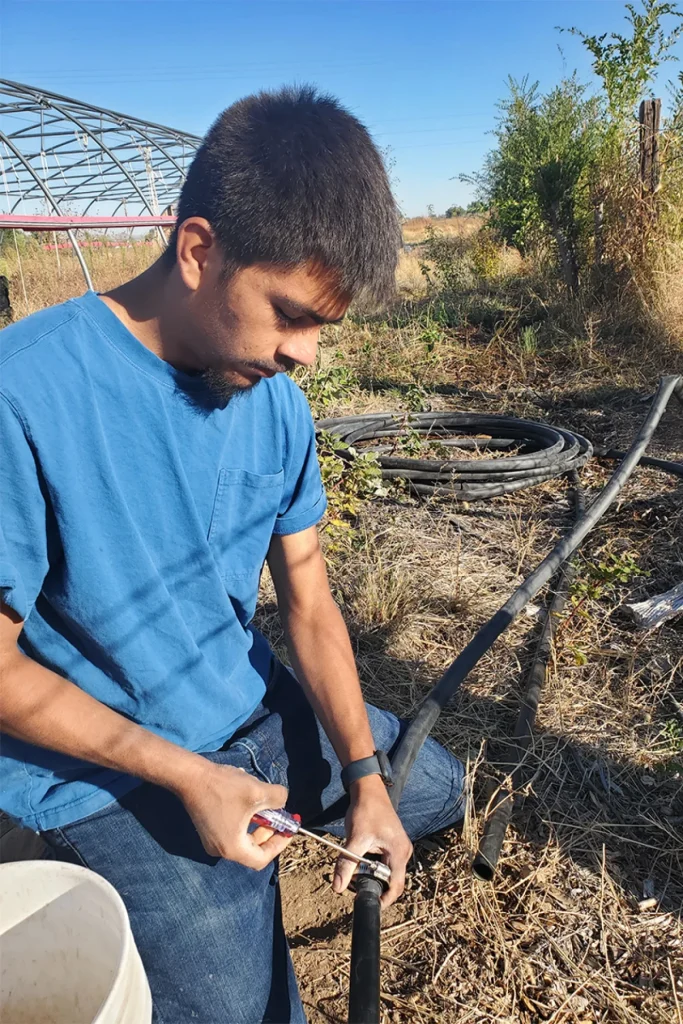
There are six apprentices in the current cohort that started earlier this year. Trusty reports that, while the current cohort is still new and trying to figure out their unique interests, there is a developing trend so far: Cooking and value-added foods.
“For example, I know today they are making garlic scape pesto and we’re going to package it and sell it at the farmers market this Saturday,” she said during the July 16 webinar. “We also just harvested a bunch of apples and are creating apple butter tomorrow and dehydrated apple slices.”
Trusty says the program tries to lean into the different cohort interests and pursue connections in the community that can support learning. She says they are looking into collaboration with a local program called the Three Sisters Kitchen that does a food business training program.
“We’re in early conversations about whether some of our folks might want to do some of their time next year at the food training program and trying to align their own personal plots at the farm, growing some things for product and selling those and helping them get a business started,” Trusty says.
The challenges of now and hopes for the future
Trusty also talked about the various challenges at Mandy’s Farm. Most of these — funding, good relations with neighbors and the county, soil quality problems — are common to any farming operation. But a unique challenge is the continuing stigma around disabled people broadly, and those with intellectual and developmental disabilities specifically.
“There’s a lot of stigma about farming as a career too, and sometimes when those things converge, there’s even more misconceptions,” she explains. “Sometimes we hear ‘can they do that work? Are they able to be farmers?’ or ‘is that appropriate?’ and that kind of thing. I hope that our apprentices are helping to change that narrative. Yes, they can, and they are wonderful farmers. Anyone would be lucky to have them.”
She adds that she hopes those in the wider agricultural community are open minded and will be willing to listen to people with disabilities.
“If someone is saying ‘this is what I want to do, this is what I’m interested in,’ believe that,” she says, urging people not to have preconceived notions on what someone is able to do. “Creating that next generation of farmers is so critical, so being creative about how we do that and providing some more supports to folks who are interested in that is really important.”
When it comes to the future, Trusty says the goals for the AgrAbility Apprenticeship Program are to be able to increase community involvement and interactions. Mandy’s Farm envision doing so through offering community workshops on agricultural practices, hosting school groups for educational visits and other offerings such as free community farm dinners.
Through these efforts, Mandy’s Farm hopes to increase social capital and feelings of connection and inclusion for their program participants. This will also give more opportunities for the apprentices to “showcase their knowledge and skills which decreases stigma and myths about individuals with disabilities,” Trusty says.
“I just wanted to emphasize how incredible and capable our apprentices are and what a meaningful experience it has been to be part of their growth,” she says. “Our apprentices graduate with agricultural skills, but they also grow in confidence, develop their ability to advocate for their needs, learn how to work on a team and resolve conflict, and develop lasting connections.”